

Introduction
At Vista Furniture Co., we spend a significant part of our time working with retailers and marketplaces that are no longer satisfied with simply buying furniture.
They want control.
They want margin.
They want differentiation.
And that usually leads to the same decision: building a private label collection.
Brazil has quietly become one of the most interesting places to do this. Not because it is the cheapest option in the world, but because it offers something far more valuable — a combination of industrial capability, design sensibility, and flexibility that is hard to find elsewhere.
If you’ve read our previous articles:
- https://brazilian-furniture.com/2026/05/11/why-furniture-imports-fail-brazil/
- https://brazilian-furniture.com/2026/05/11/flat-pack-vs-assembled-furniture-brazil/
you already understand where most sourcing projects go wrong and how structural decisions impact logistics and cost.
This article is about execution.
What it actually takes to go from an idea to a scalable furniture collection produced in Brazil.
1. Start with Positioning, Not Product
This is where most projects quietly fall apart.
There is a natural temptation to jump straight into product. A chair, a sofa, a table. Something tangible.
But without a clear positioning, every decision that follows becomes inconsistent.
You need to define, upfront:
- Who are you selling to
- What price range you are targeting
- Where the product will be sold
- What role design plays in your brand
According to Statista – Furniture Market Data, the global furniture market is increasingly segmented, with very different expectations between entry-level, mid-market, and premium buyers.
That segmentation is not abstract. It directly defines:
- materials
- construction methods
- acceptable costs
- packaging approach
If positioning is vague, sourcing becomes guesswork.
2. Choose Categories That Allow You to Learn Fast
Not every product category is a good starting point.
Some categories look attractive on paper but are operationally complex. Sofas, for example, combine upholstery, structure, comfort, logistics, and packaging challenges in a single product. They require a level of coordination that can quickly expose gaps in your sourcing process.
A more effective approach is to start with categories that are easier to control:
- chairs and armchairs
- coffee tables
- desks
- storage units
Categories like chairs and armchairs are often used as entry points in global furniture retail, particularly in large marketplaces such as Wayfair’s dining chairs category, where assortment depth, price segmentation, and SKU scalability play a central role in performance.
These categories allow you to build operational clarity step by step. You can test suppliers, validate quality standards, refine your logistics model, and better understand your cost structure without exposing the entire project to unnecessary risk.
More importantly, they help you build something that matters early on: consistency.
Because in furniture, scaling is not about adding more products. It’s about repeating the same result reliably — across batches, suppliers, and markets.You are not just launching products. You are building a system.
3. Supplier Selection Is Where Strategy Meets Reality
It is easy to underestimate how different factories can be.
Two manufacturers may produce visually similar products, but their ability to deliver consistently, at scale, and under export conditions can be completely different.
Brazil’s furniture industry is organized in clusters, with regions specializing in specific materials and processes. Data from ABIMÓVEL reinforces how structured and regionally concentrated this ecosystem is.
In practice, what matters is not just whether a supplier can produce a sample.
What matters is whether they can:
- maintain quality across batches
- meet deadlines
- understand export requirements
- scale with you
Choosing the wrong supplier rarely fails immediately. It fails slowly, through delays, inconsistencies, and friction.
4. Product Development Is Where the Real Work Happens
This is the stage most buyers underestimate.
Furniture is not a finished idea when it is designed. It becomes real through development.
That includes:
- adjusting proportions
- defining materials
- reinforcing structure
- simplifying construction
- preparing for packaging and transport
In real sourcing projects, product adaptation often involves subtle but critical changes to ensure durability, assembly efficiency, and export readiness .
Skipping or rushing this phase is one of the fastest ways to create problems later:
- pieces that don’t fit properly
- fragile components
- poor assembly experience
The difference between a good product and a scalable product is almost always in development.
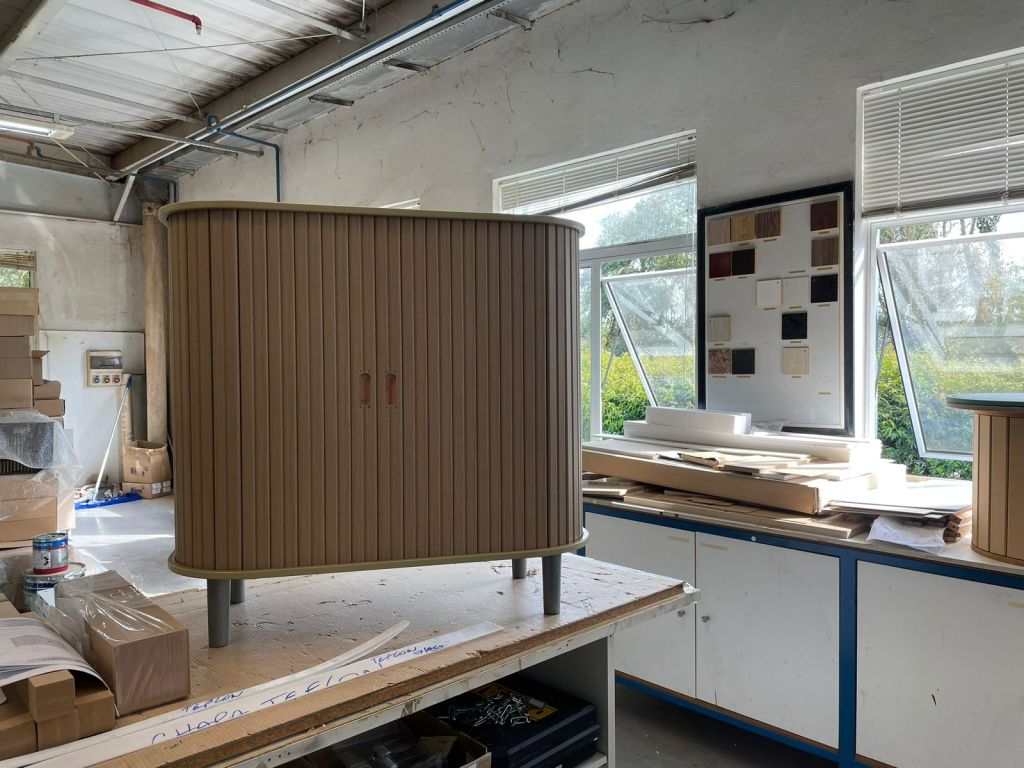
This is where most of the real work happens. Prototyping is where a design becomes a product that can actually be manufactured, shipped, and scaled.
5. Decide Early: Flat-Pack or Assembled
This decision should not be left for later.
It defines how the product is engineered from the beginning.
As explored in our previous article:
https://brazilian-furniture.com/2026/05/11/flat-pack-vs-assembled-furniture-brazil/
Flat-pack furniture is optimized for:
- logistics efficiency
- e-commerce
- scalability
Assembled furniture is optimized for:
- user experience
- perceived value
- design integrity
The mistake many companies make is trying to convert a product into flat-pack after it has already been designed as assembled.
That rarely works well.
The decision needs to be structural, not operational.
6. Packaging Is Not a Detail
In furniture, packaging is part of the product.
Especially in international logistics.
Standards defined by organizations like the International Safe Transit Association (ISTA) simulate real transport conditions and highlight how packaging must perform under stress.
Guidelines such as ISO 780 define how products should be handled and identified during shipping.
In practice, packaging needs to solve multiple problems at once:
- protect surfaces and edges
- resist impact and compression
- optimize space in containers
- be intuitive for the end customer
When packaging fails, everything else becomes irrelevant.
7. Look Beyond FOB Price
One of the most common mistakes in sourcing is focusing too much on unit cost.
What matters is the full equation.
Total landed cost includes:
- production
- packaging
- freight
- duties
- storage
- returns
Logistics performance varies significantly across markets. The World Bank Logistics Performance Index shows how infrastructure and efficiency directly impact cost and reliability.
A cheaper product that generates higher return rates or higher shipping costs quickly becomes more expensive.
8. Control Production, Don’t Just Place Orders
Once production starts, the project enters a different phase.
This is where control matters.
That includes:
- validating pre-production samples
- monitoring production progress
- checking consistency
- ensuring compliance with agreed specifications
In structured supply agreements, suppliers are expected to match approved samples and meet quality standards consistently .
Without control, small deviations accumulate and become real problems at scale.
9. Logistics Is Where Strategy Becomes Reality
Shipping furniture internationally is complex.
It requires coordination between:
- suppliers
- freight forwarders
- customs
- warehouses
Understanding trade terms is essential. The International Chamber of Commerce – Incoterms® define responsibilities between buyers and sellers across the entire logistics chain.
Decisions made here affect:
- cash flow
- delivery timelines
- operational risk
Logistics is not just execution. It is part of the business model.
10. Scaling Is a Different Game
Launching a product is one challenge. Scaling it is another.
To scale effectively, you need:
- standardized components
- optimized packaging
- reliable suppliers
- consistent quality
Growth should be deliberate.
Expanding too quickly without structure usually leads to instability.
The goal is not to add more SKUs.
The goal is to build a collection that can grow sustainably.
Why Brazil Works for Private Label
Brazil offers a combination that is increasingly rare:
- industrial capability
- design awareness
- production flexibility
It is not a one-size-fits-all sourcing market.
That is exactly why it works for private label.
It allows brands to:
- develop differentiated products
- collaborate more closely with manufacturers
- adapt collections more dynamically
For companies that want more than just buying products, this flexibility becomes a strategic advantage.
Final Thoughts
Building a private label furniture collection is not about sourcing products.
It is about building a system that connects:
- design
- engineering
- manufacturing
- logistics
The companies that succeed are not necessarily the ones with the lowest costs.
They are the ones that make better decisions earlier.
And execute them consistently.
About Vista Furniture Co.
Vista Furniture Co. is a sourcing and export consultancy that works with global retailers and brands to develop and scale furniture collections from Brazil.
We operate across the full process:
- supplier sourcing
- product development
- packaging and logistics
- production coordination
Our focus is simple: making complex sourcing operations work in a structured, reliable way.
Learn more:
https://vista-furniture.com
Connect with us:
https://www.linkedin.com/company/vista-furniture-co/
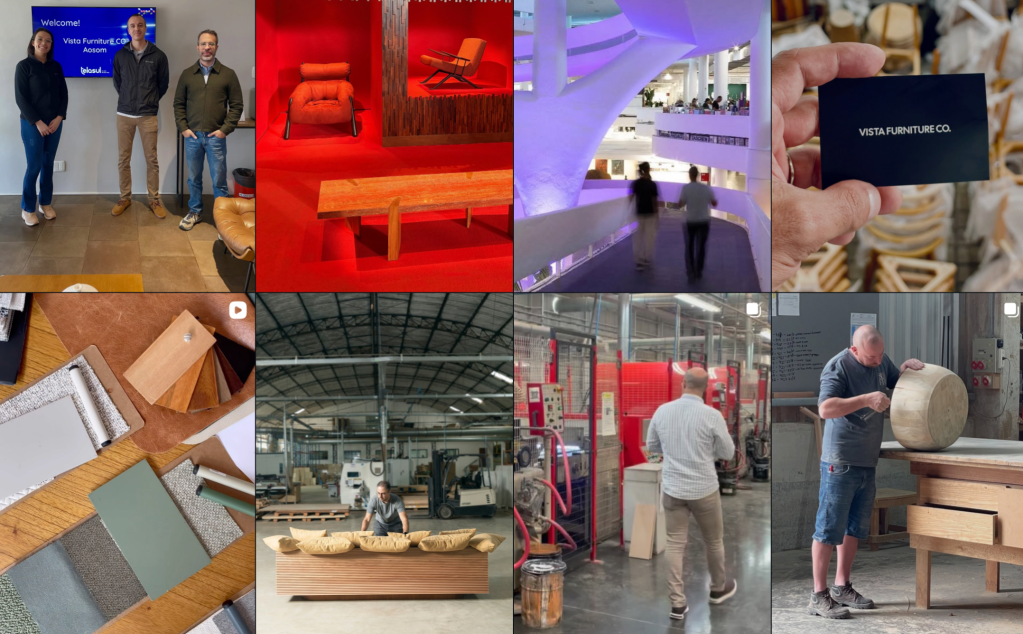
If you want to see how sourcing, product development, and factory operations actually happen on the ground, we share behind-the-scenes insights, supplier visits, and real production processes on our Instagram.
Follow along:
https://www.instagram.com/vista.furniture.co/
 Brazilian Furniture Sourcing Hub
Deixe um comentário