
By Vista Furniture Co., a sourcing and export consultancy connecting global retailers and brands with Brazilian furniture manufacturers.
For years, the global furniture industry repeated the same assumptions about manufacturing and sourcing.
China is always cheaper.
Brazil is unreliable.
Brazilian design is too niche.
Sourcing is just about finding factories.
Brazil cannot scale internationally.
Those ideas became accepted truths across retail, wholesale, e-commerce, and furniture manufacturing.
The problem is that global sourcing changed dramatically over the last decade, while much of the market kept operating with assumptions built for a completely different world.
Today, international furniture buyers are dealing with a new reality:
- rising logistics volatility
- longer forecasting cycles
- increasing return costs
- marketplace pressure
- higher customer expectations
- omnichannel complexity
- container optimization challenges
- sustainability pressure
- inventory risk
- margin compression
In this environment, many of the old beliefs about furniture sourcing are no longer fully accurate.
The companies adapting fastest are not necessarily the ones chasing the absolute cheapest factory.
They are the ones building more resilient supply chains.
And increasingly, Brazil is becoming part of that conversation.
At Vista Furniture Co., we work directly with international retailers, marketplaces, importers, and furniture brands looking to manufacture and source furniture from Brazil with more operational clarity, better design positioning, and stronger long-term flexibility.
This article breaks down five of the most common beliefs in the global furniture industry that are incomplete, outdated, or simply misunderstood.
Not to create hype around Brazil.
But to explain why serious global buyers are beginning to look at the country differently.
1. “China Is Always Cheaper Than Brazil”
This is probably the strongest belief in global furniture sourcing.
And in some categories, it is still true.
China remains one of the most sophisticated manufacturing ecosystems in the world. Its industrial scale, infrastructure, supplier density, and vertical integration are unmatched in many sectors.
But the idea that China is always cheaper is no longer universally accurate.
Especially in furniture.
Especially for modern retail operations.
Especially when analyzing total operational cost instead of only FOB price.
That distinction matters more today than ever.
The Industry Still Compares FOB Instead of Real Cost
Many buyers still evaluate sourcing decisions using only:
- factory unit price
- container price
- immediate production cost
But global furniture operations have become much more complex.
Today, profitability depends heavily on:
- inventory turnover
- lead time
- replenishment speed
- return rates
- warehouse efficiency
- packaging performance
- damage reduction
- forecast accuracy
- cash flow efficiency
This changes the equation entirely.
A product that is slightly cheaper at origin can become substantially more expensive after:
- delays
- overstocking
- inventory aging
- customer returns
- quality inconsistencies
- packaging failures
- high domestic freight costs
- operational inefficiencies
This is especially relevant for:
- e-commerce furniture brands
- marketplace sellers
- DTC furniture companies
- omnichannel retailers
- design-focused collections
- seasonal products
- trend-sensitive categories
The old sourcing logic prioritized scale above all else.
Modern sourcing increasingly prioritizes flexibility.
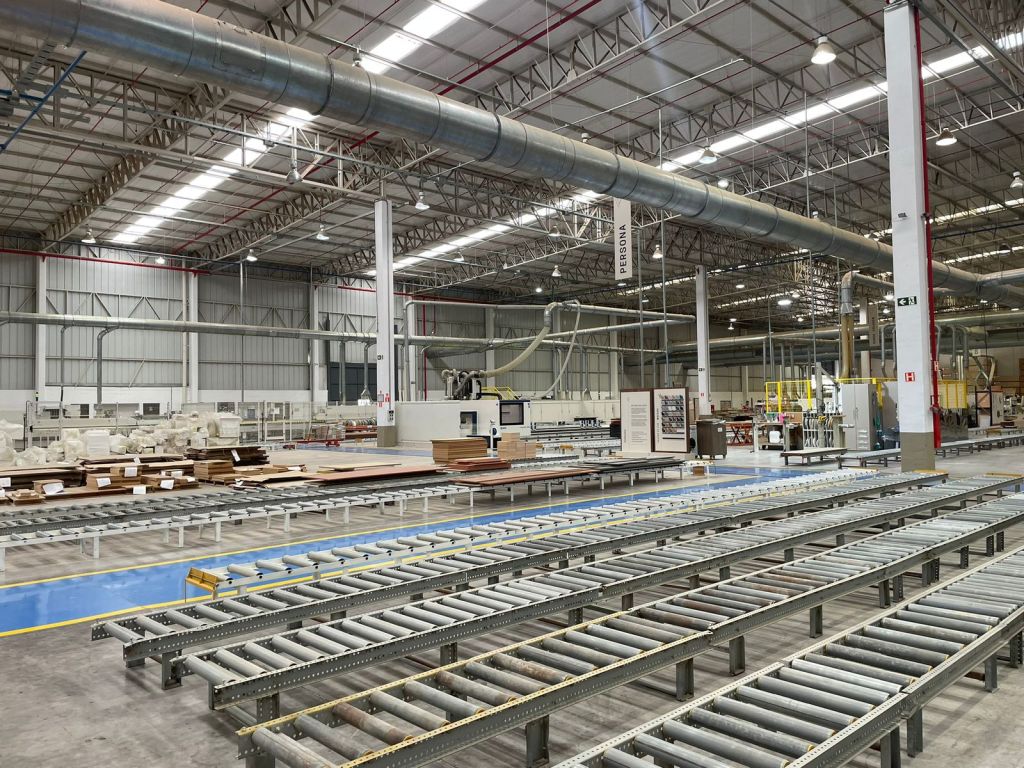
Vista Furniture Co. connects international retailers with Brazilian manufacturers like this, managing product development, quality control, and export logistics from start to finish.
#VistaFurnitureCo #BrazilianFurniture #FurnitureSourcing #FurnitureManufacturing #BrazilianDesign
Why Brazil Becomes Competitive in Certain Furniture Categories
Brazil tends to perform particularly well in:
- upholstered furniture
- solid wood furniture
- contemporary design furniture
- dining tables
- accent chairs
- occasional furniture
- hospitality furniture
- lifestyle collections
- medium-volume manufacturing
- flexible production runs
The country also has strong capabilities in:
- woodworking
- upholstery
- handcrafted finishing
- mixed-material construction
- tropical hardwood expertise
- curved wood manufacturing
- contemporary design development
Furniture manufacturing clusters in Southern Brazil, especially around Bento Gonçalves and neighboring regions, have decades of industrial experience.
Organizations such as ABIMÓVEL and trade fairs like Movelsul Brasil and Movel Brasil help demonstrate the scale and maturity of the Brazilian furniture industry.
Lead Time Is Becoming a Financial Variable
This is where many sourcing conversations become outdated.
A retailer waiting 140 to 180 days for inventory is not simply waiting for products.
They are:
- freezing capital
- increasing forecast risk
- reducing flexibility
- exposing themselves to trend shifts
- creating markdown pressure
The modern furniture market moves faster than it did ten years ago.
Social media accelerates product cycles.
Trend adoption happens faster.
Consumer preferences shift faster.
Marketplace competition changes faster.
For many operations, shorter lead times now directly improve profitability.
That is one reason why nearshoring and regional diversification became major sourcing strategies after 2020.
Companies like IKEA, Wayfair, Target, and Walmart have all publicly discussed supply chain diversification and sourcing resilience in different ways over recent years.
The global market is no longer optimizing exclusively for the cheapest possible unit cost.
It is optimizing for resilience.
2. “Brazil’s Biggest Problem Is Price”
This belief is also incomplete.
Price matters.
But in international furniture retail, predictability matters even more.
The Real Problem Is Operational Consistency
Many international buyers are willing to pay more when suppliers provide:
- reliable lead times
- professional communication
- packaging consistency
- lower damage rates
- accurate documentation
- production transparency
- responsive support
- scalable systems
Furniture is operationally complex.
Unlike fashion or small consumer goods, furniture creates:
- expensive returns
- large shipping costs
- warehouse inefficiencies
- assembly issues
- customer service pressure
- damage claims
- inventory management challenges
A single operational failure can eliminate the margin of an entire container.
This is why sophisticated retailers focus heavily on process quality.
Not just manufacturing price.
Most Export Problems Are Operational, Not Industrial
Many Brazilian manufacturers actually produce high-quality furniture.
The difficulty often appears elsewhere:
- weak export communication
- inconsistent packaging
- poor documentation
- lack of testing
- unclear specifications
- limited compliance knowledge
- inadequate quality systems
- missing retail readiness
This is a very different problem from “Brazil cannot manufacture.”
It means many factories were never properly integrated into international retail standards.
That distinction matters enormously.
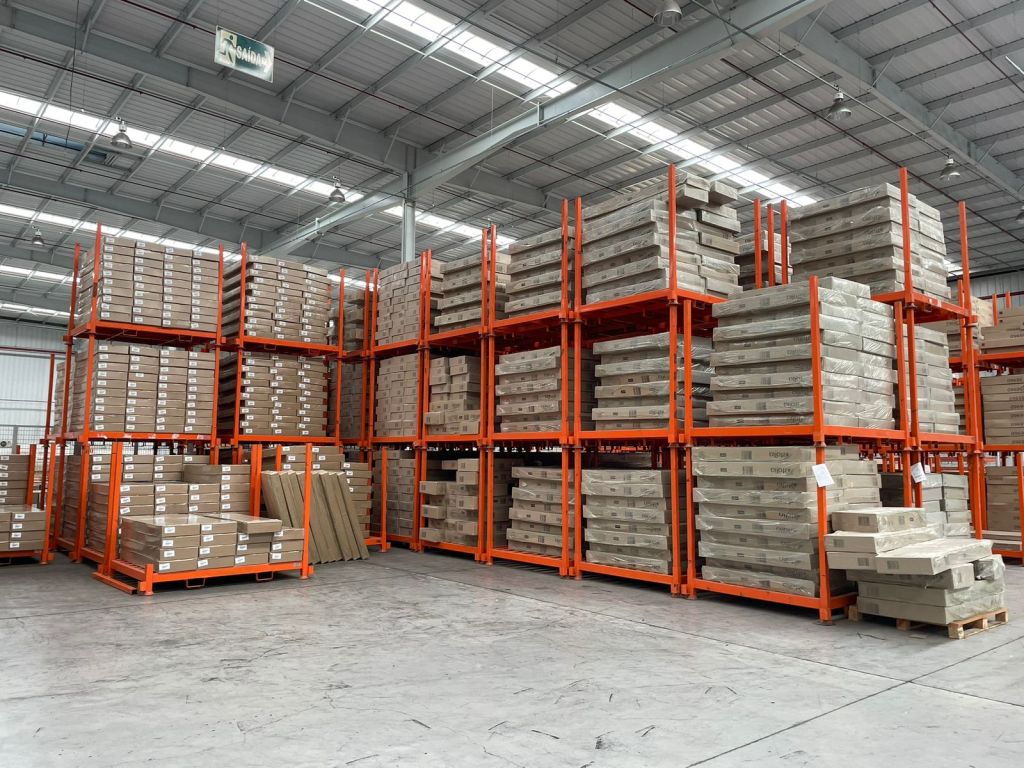
Packaging Is Now Part of Product Development
One of the clearest examples is packaging.
Modern international furniture retail increasingly depends on:
- flat-pack optimization
- drop-test resistance
- e-commerce survivability
- parcel delivery durability
- warehouse stacking
- barcode systems
- multilingual manuals
- compliance labeling
Large global retailers treat packaging engineering as a strategic discipline.
And rightly so.
Companies operating large e-commerce ecosystems often maintain extremely detailed packaging requirements involving:
- ISTA testing
- compression standards
- labeling systems
- traceability
- drop tests
- recycling requirements
- multilingual compliance
- importer labeling
- warning systems
The operational documentation provided by international retailers like Aosom illustrates how sophisticated modern furniture logistics has become.
This is not simply about “making furniture.”
It is about building furniture capable of surviving a global retail ecosystem.
The Best Suppliers Are Becoming Systems Companies
The global market increasingly rewards suppliers that operate like systems businesses rather than traditional factories.
That means:
- standardized communication
- documented QC
- repeatable packaging
- engineering consistency
- production visibility
- compliance readiness
- operational maturity
This shift is happening worldwide.
And Brazilian manufacturers that adapt to this reality are becoming increasingly competitive internationally.
3. “Brazilian Design Is Too Niche”
This idea may have been partially true twenty years ago.
It is becoming increasingly outdated today.
Global Design Became Saturated
The international furniture market spent years converging toward similar aesthetics:
- Scandinavian minimalism
- neutral palettes
- anonymous forms
- generic contemporary design
- mass-market simplicity
As a result, many collections across global retail began looking interchangeable.
Consumers increasingly notice this.
And brands increasingly notice it too.
The market is now searching for:
- identity
- texture
- storytelling
- regional authenticity
- emotional connection
- material richness
- warmer environments
- human-centered aesthetics
This is where Brazilian design becomes relevant.
Brazilian Design Has Global Characteristics
Brazilian furniture design often combines:
- modernism
- organic forms
- tropical influence
- craftsmanship
- material warmth
- architectural influence
- wood culture
- relaxed sophistication
Importantly, Brazilian design rarely feels over-designed.
It tends to balance:
- elegance
- comfort
- informality
- tactility
- usability
That combination resonates strongly in:
- hospitality
- luxury residential
- boutique retail
- premium multifamily
- wellness-oriented interiors
- lifestyle-driven brands
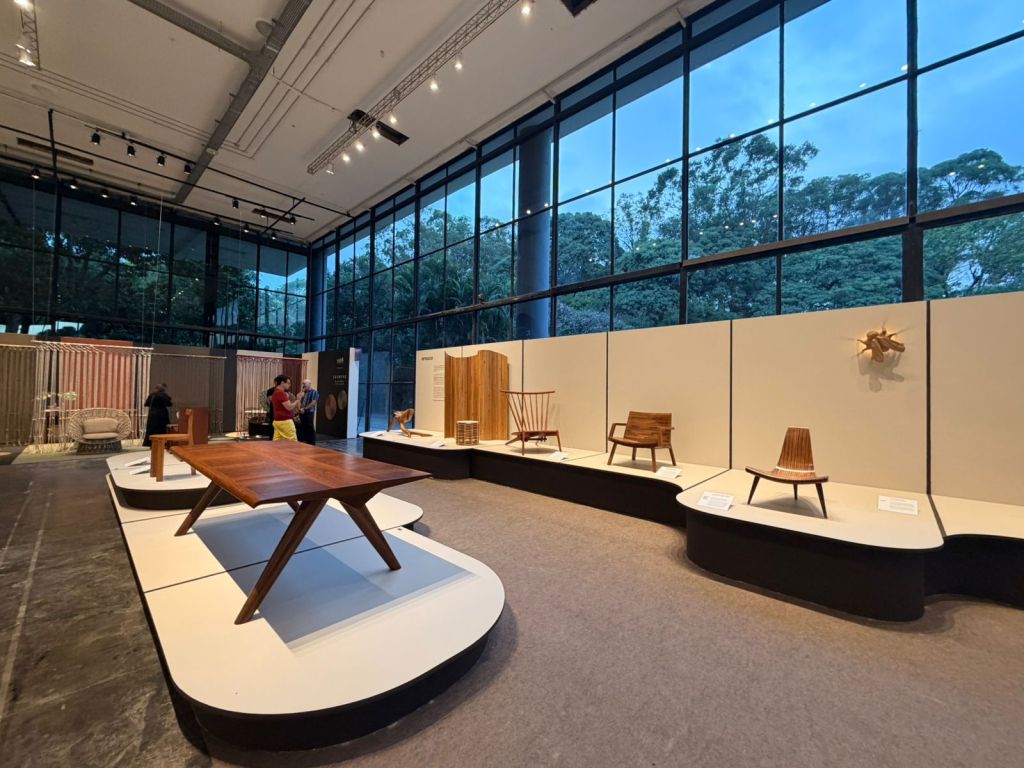
Brazilian Modernism Already Has International Recognition
The idea that Brazilian design lacks international value ignores decades of design history.
Designers such as:
- Sergio Rodrigues
- Joaquim Tenreiro
- Lina Bo Bardi
- Oscar Niemeyer
helped establish a globally recognized design language connected to Brazil.
Today, younger studios and manufacturers continue evolving that legacy in more contemporary ways.
International interest in:
- Latin American interiors
- collectible furniture
- tropical modernism
- artisanal luxury
- contemporary Brazilian design
has increased substantially over recent years.
Events like SP-Arte also reinforce São Paulo’s growing importance within the global design conversation.
Social Media Changed Design Consumption
Instagram, Pinterest, TikTok, and AI-driven visual discovery systems changed how furniture trends spread globally.
Today, visually distinctive products outperform generic products online.
Furniture now competes for:
- saves
- shares
- mood boards
- interior reposts
- aesthetic identity
Design differentiation became commercially valuable again.
And Brazil naturally performs well in emotionally expressive furniture categories.
4. “Brazil Cannot Operate at International Standards”
This is one of the most misleading assumptions in the furniture industry.
Because it confuses operational maturity with industrial capability.
They are not the same thing.
Brazil Already Has Industrial Capacity
Brazil possesses substantial furniture manufacturing infrastructure.
The country already manufactures for:
- domestic retail chains
- export operations
- hospitality projects
- custom commercial projects
- international distributors
- private label programs
The issue is not whether Brazil can manufacture.
The issue is whether production is being aligned correctly with international operational expectations.
That is a management challenge.
Not a capability limitation.
International Retail Requirements Are Extremely Specific
Modern furniture retail requires:
- drop-test validation
- barcode systems
- multilingual manuals
- importer labeling
- TSCA compliance
- flammability standards
- packaging optimization
- assembly logic
- warehouse compatibility
- marketplace readiness
The operational appendices and compliance structures used by global retailers demonstrate how detailed these requirements are.
These are highly process-oriented systems.
Factories do not automatically learn them by themselves.
They require:
- translation
- coordination
- implementation
- auditing
- supplier education
- production management
This is precisely why sourcing support and operational guidance became increasingly important globally.
Most Failures Happen Between Teams
One of the biggest misconceptions in sourcing is assuming factories fail alone.
In reality, many international sourcing failures happen because:
- buyers communicate poorly
- specifications are incomplete
- expectations are unclear
- product engineering is unrealistic
- packaging assumptions are wrong
- timelines are misaligned
- nobody coordinates execution
Furniture sourcing is deeply collaborative.
And cross-cultural operations increase complexity further.
The companies succeeding internationally are usually the ones creating better operational bridges between:
- design
- retail
- engineering
- logistics
- manufacturing
Not merely negotiating cheaper prices.
Export Readiness Is Learnable
This is important.
Most international retail standards are process-based.
That means they can be implemented.
Factories can improve:
- packaging
- QC systems
- manuals
- labeling
- documentation
- testing
- communication
- workflow management
The challenge is usually operational leadership.
Not manufacturing impossibility.
That distinction changes how international buyers should evaluate Brazil entirely.
5. “Sourcing Is Just Finding Suppliers”
This belief is probably the most outdated of all.
Because modern sourcing has evolved into a much broader strategic discipline.
Supplier Discovery Became Easy
Today, anyone can:
- search factories online
- attend trade fairs
- browse Alibaba
- use sourcing platforms
- contact manufacturers directly
Finding suppliers is no longer the hard part.
Managing sourcing complexity is.
Modern Sourcing Is Risk Management
Real sourcing today involves:
- operational filtering
- compliance validation
- packaging assessment
- engineering adaptation
- MOQ alignment
- logistics optimization
- quality forecasting
- communication management
- design translation
- supplier qualification
- production supervision
The best sourcing operations reduce uncertainty.
That is the actual value.
Furniture Sourcing Is Increasingly Cross-Functional
Furniture sourcing now intersects with:
- industrial design
- logistics
- engineering
- retail operations
- customer experience
- sustainability
- compliance
- warehouse management
- e-commerce
- packaging science
This is why modern sourcing companies increasingly behave like operational consultancies rather than traditional trading companies.
At Vista Furniture Co., our role is not simply introducing factories.
We help international clients navigate:
- supplier matching
- production management
- design adaptation
- packaging optimization
- export readiness
- quality alignment
- operational translation
- product positioning
Because global furniture sourcing became substantially more technical than it was ten years ago.
Why Brazil Is Entering a Different Global Position
Brazil will not replace China.
And serious professionals should avoid simplistic narratives like that.
The global furniture industry is too large and too interconnected for binary thinking.
What is happening instead is diversification.
Global buyers increasingly want:
- regional flexibility
- lower geopolitical exposure
- reduced lead times
- differentiated design
- diversified manufacturing bases
- operational resilience
Brazil fits naturally into several of those priorities.
Particularly in:
- design-driven furniture
- mid-premium positioning
- hospitality
- contemporary collections
- flexible production
- regional diversification strategies
The Future of Furniture Sourcing Is Hybrid
The future is probably not:
- only Asia
- only Latin America
- only Europe
It is hybrid sourcing ecosystems.
Different countries will increasingly serve different strategic functions.
For many retailers:
- Asia may remain essential for scale
- Eastern Europe may support regional production
- Mexico may support nearshoring
- Vietnam may support diversification
- Brazil may support design differentiation and flexible manufacturing
This is already happening.
Quietly.
The Most Important Shift Is Philosophical
The furniture industry is slowly moving away from a purely cost-driven sourcing mindset.
And toward a resilience-driven sourcing mindset.
That changes everything.
Because resilience includes:
- design differentiation
- operational stability
- communication quality
- production flexibility
- supply chain adaptability
- packaging performance
- lead time control
- market responsiveness
When viewed through that lens, Brazil starts making much more strategic sense.
Final Thought
The biggest misunderstanding about Brazil is not that the country lacks manufacturing capacity.
It is that most people still analyze Brazil using outdated sourcing logic.
The modern furniture market no longer rewards only the cheapest factory.
It rewards:
- agility
- differentiation
- operational consistency
- product identity
- supply chain resilience
Brazil is not perfect.
No manufacturing ecosystem is.
But the gap between perception and reality in Brazilian furniture manufacturing is now significantly larger than many international buyers realize.
And that gap is creating opportunities for the companies willing to look beyond old assumptions.
About Vista Furniture Co.
Vista Furniture Co. is a Brazil-based sourcing and export consultancy that connects global retailers, marketplaces, hospitality groups, and furniture brands with vetted Brazilian manufacturers.
We support international clients with:
- furniture sourcing in Brazil
- supplier matchmaking
- product development
- export-ready adaptation
- packaging optimization
- production management
- quality control
- design scouting
- logistics coordination
- private label furniture development
Our work combines local manufacturing knowledge with international retail standards to help brands scale furniture collections from Brazil with more clarity, speed, and operational reliability.
Follow Vista Furniture Co. on LinkedIn for insights about furniture sourcing, Brazilian manufacturing, global retail, and design-driven supply chains.
Website: vista-furniture.com
Email: contact@vista-furniture.com
Instagram: @vista.furniture.co
LinkedIn: Vista Furniture Co. on LinkedIn
 Brazilian Furniture Sourcing Hub
Deixe um comentário