
This article draws on insights from Vista Furniture Co., a sourcing and export partner that helps global retailers and marketplaces manufacture furniture in Brazil by connecting them with reliable Brazilian manufacturers and streamlined international logistics.
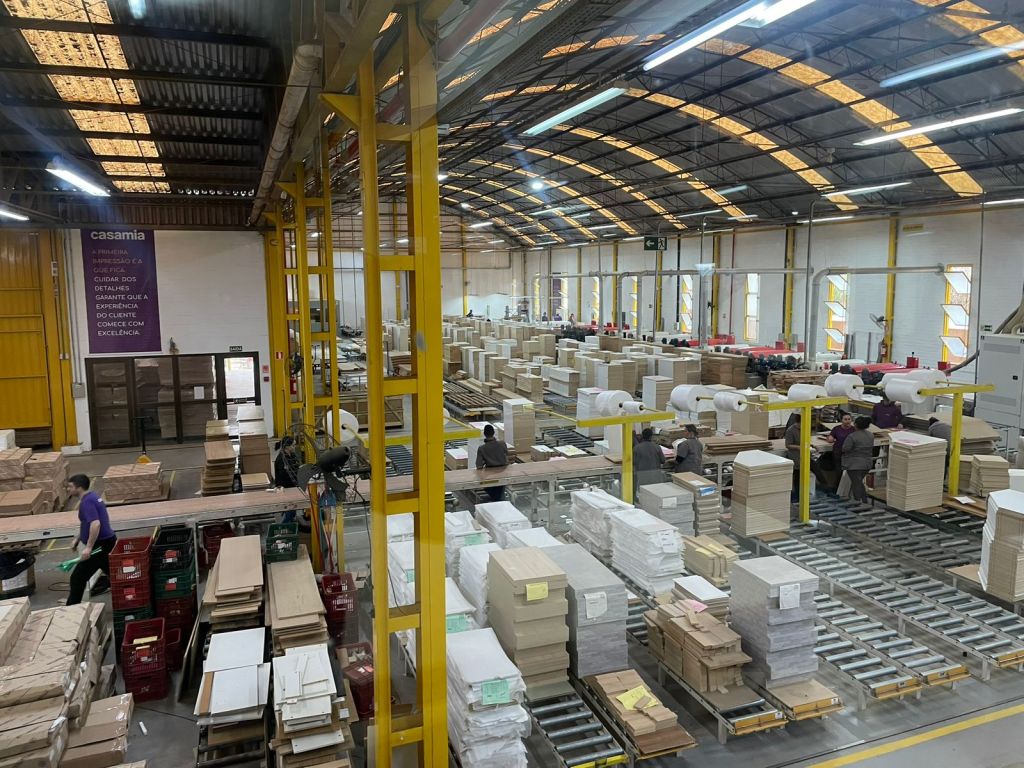
For decades, Asia has been the dominant manufacturing hub for furniture sold across the United States and Europe. Countries like China, Vietnam, and Malaysia built large-scale production ecosystems capable of serving global retailers at competitive prices.
However, the global furniture supply chain is undergoing a significant shift. Rising labor costs in Asia, geopolitical tensions, supply chain disruptions, and increasing shipping costs have pushed many brands to explore alternative sourcing regions.
Today, more international buyers are asking an important question:
Is manufacturing furniture in Brazil a competitive alternative to Asia?
The answer depends on understanding the real cost structure behind furniture manufacturing, which goes far beyond factory prices. Production costs, freight, tariffs, lead times, quality control, and supply chain resilience all play a role in determining the true landed cost of furniture.
In this article, we break down the key factors global retailers and brands should consider when comparing furniture manufacturing in Brazil vs Asia.
The Traditional Advantage of Asian Furniture Manufacturing
For many years, Asia offered three major advantages in furniture manufacturing:
• large-scale production capacity
• lower labor costs
• established export infrastructure
China, in particular, developed one of the most sophisticated furniture manufacturing ecosystems in the world. According to the International Trade Administration, China remains the largest exporter of furniture globally.
Vietnam has also emerged as a major furniture manufacturing hub, especially for companies looking to diversify production away from China.
https://www.statista.com/statistics/1080446/vietnam-furniture-exports/
These regions benefit from dense supply chains, strong logistics networks, and decades of experience exporting to Western markets.
But the equation has been changing quickly.
Rising Costs in Asian Furniture Manufacturing
One of the biggest misconceptions among global buyers is that Asia always represents the lowest-cost option.
In reality, several factors have increased the total cost of sourcing furniture from Asia.
Labor cost increases
Manufacturing wages in China have increased significantly over the past decade. As production costs rose, many companies shifted operations to Vietnam, Indonesia, and Cambodia. But wages in these markets are also rising as demand grows.
Tariffs and trade policies
Tariffs have had a major impact on furniture imports into the United States. Trade policies affecting Chinese furniture products increased costs for many categories.
These tariffs have forced many retailers to rethink sourcing strategies and adopt what is commonly known as the China Plus One strategy, where production is diversified across multiple regions.
https://www.piie.com/blogs/trade-and-investment-policy-watch
Shipping costs and logistics volatility
Furniture is a bulky product category. Freight costs significantly impact landed cost.
Shipping containers from Asia to the United States can take several weeks and are highly sensitive to global logistics disruptions. During the pandemic, container prices increased dramatically, exposing vulnerabilities in long-distance supply chains.
https://www.freightos.com/enterprise/terminal/freightos-baltic-index-global-container-pricing-index/
Even though freight rates have stabilized, long shipping routes remain a structural cost factor for furniture imports.
Why Brazil Is Emerging as a Furniture Manufacturing Alternative
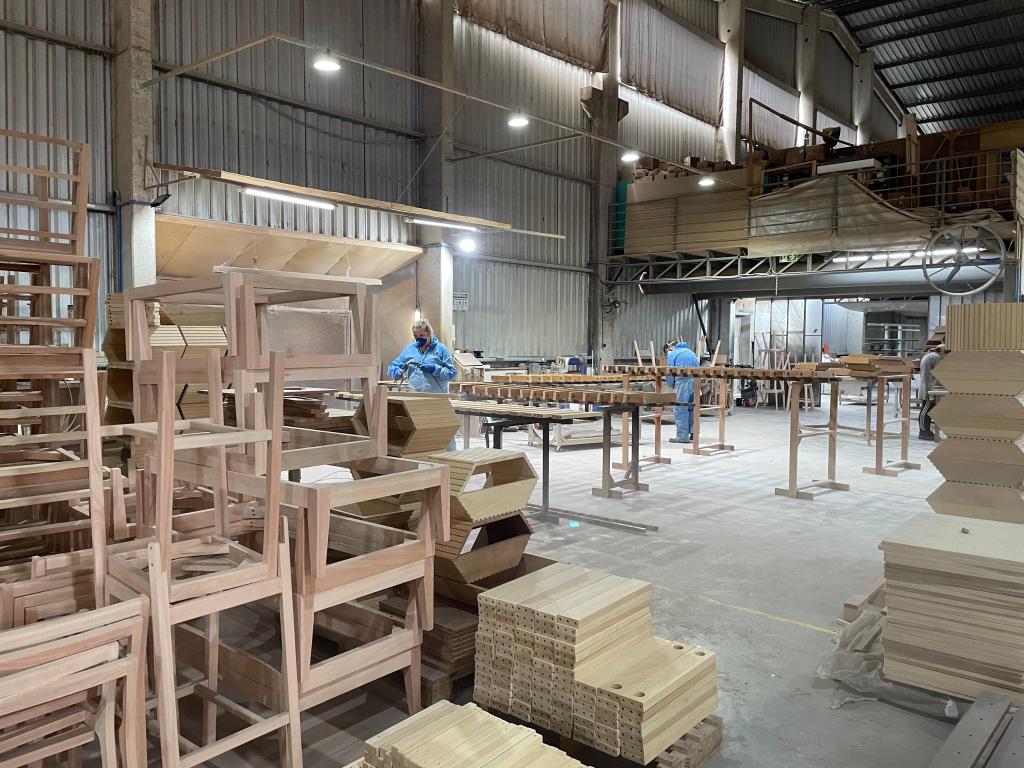
Brazil has quietly developed one of the largest furniture industries in the Western Hemisphere. The country has a strong tradition in woodworking, upholstery, and design-driven furniture production.
Several factors are making Brazil increasingly attractive for international buyers.
Competitive production costs
Brazil offers competitive manufacturing costs for many furniture categories, particularly:
• solid wood furniture
• upholstered furniture
• design-oriented furniture
• medium-volume production runs
Brazilian factories often combine industrial production with skilled craftsmanship, which allows greater flexibility compared to highly standardized Asian factories.
This makes Brazil particularly attractive for brands focused on design differentiation.
Shorter supply chains for the Americas
Geography plays an important role in sourcing strategy.
Shipping furniture from Brazil to the United States typically takes two to three weeks, compared to four to six weeks from Asia.
For companies selling in North America, shorter transit times offer several advantages:
• faster inventory replenishment
• reduced working capital tied to inventory
• greater supply chain flexibility
In an industry where trends change quickly, reducing supply chain lead time can be a major competitive advantage.
Strong woodworking and upholstery capabilities
Brazil has a long tradition of furniture craftsmanship and industrial woodworking.
Regions such as Rio Grande do Sul, Santa Catarina, and São Paulo host clusters of specialized manufacturers capable of producing high-quality furniture across multiple segments.
Brazil is particularly strong in:
• solid wood furniture
• upholstered furniture
• dining chairs
• contemporary design furniture
The country also has access to abundant forestry resources, supporting sustainable wood-based furniture production.
Comparing the Real Landed Cost
When global buyers compare sourcing options, focusing only on factory price can be misleading.
The real cost of furniture manufacturing includes several components.
Factory production cost
Asian factories may still offer lower base manufacturing prices in some categories, particularly for large-scale standardized production.
However, Brazilian factories can be competitive for:
• mid-volume production
• design-focused furniture
• custom or semi-custom collections
Production flexibility often offsets small differences in factory price.
Freight and logistics
Freight plays a major role in the landed cost of furniture.
Shipping from Asia involves:
• longer transit times
• higher container costs
• greater exposure to port congestion
In contrast, Brazil offers shorter logistics routes for the Americas, which can reduce total supply chain risk.
Tariffs and trade barriers
Tariffs vary depending on product categories and trade policies. Buyers must evaluate import duties for their specific market and product category.
However, diversification away from China has become a priority for many companies seeking to reduce exposure to trade tensions.
Inventory and working capital
Long supply chains increase the amount of inventory companies must hold.
If production and shipping take 90 to 120 days, buyers must finance larger inventory volumes.
Shorter lead times from Brazil allow companies to operate with leaner inventory strategies.
For many retailers, this can significantly reduce total operational costs.
Quality and Production Flexibility
Another factor influencing sourcing decisions is production flexibility.
Many Asian factories operate highly optimized production lines designed for very large volumes. While efficient, these setups can make customization difficult.
Brazilian manufacturers often operate with greater flexibility, allowing:
• smaller minimum order quantities
• more design variation
• faster product development cycles
For brands building differentiated collections, this flexibility can be extremely valuable.
Sustainability and Material Traceability
Sustainability is becoming increasingly important in the furniture industry.
Many retailers are under pressure to ensure responsible sourcing and material traceability.
Brazil offers advantages in this area due to its forestry sector and established certification systems.
Organizations such as the Forest Stewardship Council provide certification frameworks that support sustainable wood sourcing.
For brands focused on sustainability, Brazil’s forestry resources can be an important advantage.
When Brazil Makes the Most Sense for Furniture Manufacturing
Brazil is not necessarily the best option for every product category. However, it becomes highly competitive in specific scenarios.
Brazil is particularly attractive for companies looking to:
• diversify supply chains outside Asia
• source solid wood furniture
• produce upholstered furniture collections
• develop design-driven furniture products
• reduce shipping lead times to the Americas
For many retailers, the best sourcing strategy is not choosing a single region but building a balanced multi-region supply chain.
The Future of Global Furniture Sourcing
The global furniture supply chain is evolving.
Instead of relying exclusively on one region, many international brands are building diversified production networks that include multiple manufacturing hubs.
This approach reduces supply chain risk and allows companies to adapt to changing market conditions.
As part of this shift, Brazil is becoming an increasingly relevant destination for furniture manufacturing and sourcing.
Its combination of skilled craftsmanship, industrial production capacity, and geographic proximity to the Americas makes it an attractive option for many global buyers.
About Vista Furniture Co.
For global retailers and brands looking to manufacture furniture in Brazil, identifying reliable suppliers and navigating the production ecosystem can be challenging without local expertise. Vista Furniture Co. specializes in connecting international buyers with trusted Brazilian furniture manufacturers, supporting every stage of the process from supplier selection and product development to quality control and export logistics. By combining deep knowledge of the Brazilian furniture industry with international sourcing experience, Vista helps companies build efficient and reliable furniture supply chains in Brazil.
Website
https://vista-furniture.com
LinkedIn
https://www.linkedin.com/company/vista-furniture-co/
Instagram:
https://www.instagram.com/vista.furniture.co
 Brazilian Furniture Sourcing Hub
Deixe um comentário