
Introduction
Sourcing furniture from Latin America — particularly Brazil — is becoming a strategic move for international retailers and product teams aiming to reduce lead times, gain supply chain resilience, and tap into certified wood and skilled labor. But the challenge isn’t just finding a factory — it’s knowing whether that factory can actually deliver.
That’s where Vista Furniture Co. comes in. We’ve helped global buyers vet, onboard, and scale with Brazil’s top export-ready factories — navigating compliance, quality, and logistics with local precision.
Brazil’s furniture market is projected to reach USD $16 billion by 2030, with a CAGR of 5.9% from 2022 to 2030, according to Grand View Research. This growth reflects increased interest in nearshoring strategies, particularly for U.S. and Latin American retailers.
Furniture manufacturing in the region ranges from artisanal workshops to fully industrialized plants. Some suppliers are well-versed in export operations, while others are still adapting to international compliance standards. That’s why vetting your manufacturing partner is not optional — it’s essential. — particularly Brazil — is becoming a strategic move for international retailers and product teams aiming to reduce lead times, gain supply chain resilience, and tap into certified wood and skilled labor. But the challenge isn’t just finding a factory — it’s knowing whether that factory can actually deliver.
Furniture manufacturing in the region ranges from artisanal workshops to fully industrialized plants. Some suppliers are well-versed in export operations, while others are still adapting to international compliance standards. That’s why vetting your manufacturing partner is not optional — it’s essential.
In this comprehensive guide, we walk you through 10 red flags and 10 green lights to help you assess whether a Latin American factory is ready to meet your sourcing goals. Whether you’re buying for B2B, B2C, D2C, or private label, this article gives you the practical tools to avoid costly mistakes and build smarter sourcing relationships.
Why Vetting Matters More Than Ever
In a world of nearshoring, geopolitical risk, and increasing compliance demands, due diligence is the new differentiator. Brands that rely on outdated sourcing logic — like choosing based on catalog photos or lowest FOB — often end up with misaligned specs, delayed shipments, and packaging that doesn’t pass U.S. or EU retail standards.
Vetting ensures that your supplier can:
- Deliver consistently across multiple production cycles
- Comply with U.S., EU, and LATAM regulations
- Communicate in your team’s language (literally and operationally)
- Protect your brand through quality, documentation, and reliability
That’s why companies that source successfully from Latin America often rely on local sourcing specialists — like Vista Furniture Co. — to scout, audit, and manage supplier relationships on the ground. Learn more.
🔴 10 Red Flags When Vetting a Furniture Manufacturer
1. No Export Experience
Many factories in Latin America are highly competent in local production but have never handled export logistics. Without export experience, manufacturers often lack familiarity with international standards like palletization for container loading, labeling requirements (e.g., country of origin tags), or the complexities of export documentation (such as commercial invoices, packing lists, or HS codes). If they’ve never worked with freight forwarders or customs brokers, delays and compliance issues are likely. Always ask for past export documents or client references abroad. ApexBrasil’s furniture export initiatives
2. Disorganized Production Floor
A factory’s layout is often a reflection of its operational discipline. Disorganized workstations, materials left on the floor, or unclear workflow between cutting, assembly, finishing, and packing areas signal a lack of process control. This disarray often translates into inconsistent output, delays, higher defect rates, and even safety issues. A walk through the facility should give you confidence in their systems, not raise red flags.
3. No FSC Certification or Traceability
FSC certification is no longer optional for brands selling through Amazon, Target, or other large retailers. If a supplier can’t clearly identify the source of their raw materials — and verify legality and sustainability — it exposes your brand to ESG risks and potential legal liability. Worse, in some countries, illegal logging practices persist, and using uncertified wood could result in seized shipments or delisted SKUs. Explore FSC
4. No Reference Samples or Product Tolerances
A good supplier should be able to provide samples quickly, based on your spec or one of their existing items. If they dodge the sampling step, provide incomplete specs, or can’t control product tolerances, it’s a sign of immature production. Small dimensional inconsistencies can lead to costly rejections — especially for flat-pack items that must fit precisely.
5. Unclear Legal Structure
If the entity you’re dealing with has vague ownership details, isn’t legally registered for export, or doesn’t provide proper invoicing capabilities, you may face serious complications with contract enforcement, tax compliance, or international payments. Always request corporate registration documents and confirm who has the legal authority to sign agreements.
6. Language Barriers or Slow Response
Clear, prompt communication is essential during product development, sampling, production, and shipment. If you need to explain technical details multiple times — or if days pass without a reply — misunderstandings will grow. Language mismatches can delay approvals, skew measurements, or lead to incorrect components being produced. You need a team that speaks your language — literally and commercially.
7. No Awareness of Compliance Standards
If a manufacturer can’t tell you whether their MDF is CARB Phase 2 compliant, or if they’ve never heard of TSCA Title VI, you should proceed with caution. Non-compliance with formaldehyde limits, fire safety norms, or mechanical resistance testing (e.g., EN 12520) can result in customs holds, fines, or lost retail accounts. See Amazon’s packaging guide
8. Overpromising on Capacity or Lead Time
It’s tempting for suppliers to say yes to every spec, deadline, and volume — especially when competing for a new client. But unrealistic promises are a recipe for disaster. Watch for vague answers like “no problem” when you ask about order batching, seasonal fluctuation, or packaging complexity. A reliable factory knows its throughput and capacity and isn’t afraid to say no.
9. No In-line or Final Quality Control
Quality assurance isn’t just an end-of-line activity. Strong manufacturers implement in-line inspections — measuring dimensions during cutting, checking alignment during assembly, and verifying finishes before packaging. If they don’t have visual standards, checklists, or a dedicated QA team, you’ll end up doing their job later — or dealing with high returns.
10. Resistance to NDAs or IP Clauses
If you’re developing a proprietary product or private-label line, you need to protect your designs and brand. Factories that refuse to sign NDAs or push back on confidentiality or exclusivity clauses may not respect your IP — and worse, may resell your designs locally or to competitors.
✅ 10 Green Lights That Signal a Strong Factory Partner
1. Proven Export History
Factories with export experience usually understand the operational requirements of international clients — from accurate documentation to appropriate moisture content in wood to compliance-ready packaging. Ask for recent shipping records, client references, or even HS codes they’ve worked with.
2. FSC-Certified and Traceable Wood
Brazil is a global leader in FSC-certified eucalyptus and reforested pine, with legal and audited chains of custody. A supplier who can show their certification numbers and sourcing documentation helps your brand meet sustainability goals and avoid environmental backlash. Learn about FSC
3. Documented Quality Process
From raw material control to packaging inspection, well-managed factories document their QA process and train staff accordingly. Look for quality manuals, product inspection photos, defect tracking reports, and clear escalation paths. These are signs they can scale your orders with consistency.
4. Bilingual Team
Good communication starts with comprehension. Factories with English- or Spanish-speaking commercial and technical teams reduce the risk of costly misunderstandings and project delays. Vista only partners with suppliers that meet this baseline.
5. Prototyping and Sampling Process
Responsive factories understand that prototyping is essential to get alignment before mass production. They document changes, share updates proactively, and work collaboratively. Whether you’re adapting an existing model or developing a custom piece, prototyping is a reflection of how they’ll manage your business.
6. Regulatory Knowledge
Whether you’re shipping to California or Germany, compliance is non-negotiable. Strong factories understand TSCA, CARB, EN, and TB117 — and can explain how their materials, labeling, and adhesives meet those standards. They can also help you prep technical files and test reports if needed. View Target’s vendor guides
7. Reasonable MOQs
Instead of forcing high minimums across the board, mature factories adjust based on complexity, materials, and production cycles. They’re transparent about why an MOQ exists and how it can evolve as your volumes increase.
8. Strong Technical Documentation
Reliable manufacturers provide BOMs (Bills of Materials), exploded diagrams, assembly guides, and packaging instructions — not just vague sketches. This is key to aligning internal teams, external certifiers, and logistics providers.
9. Organized, Well-Equipped Facilities
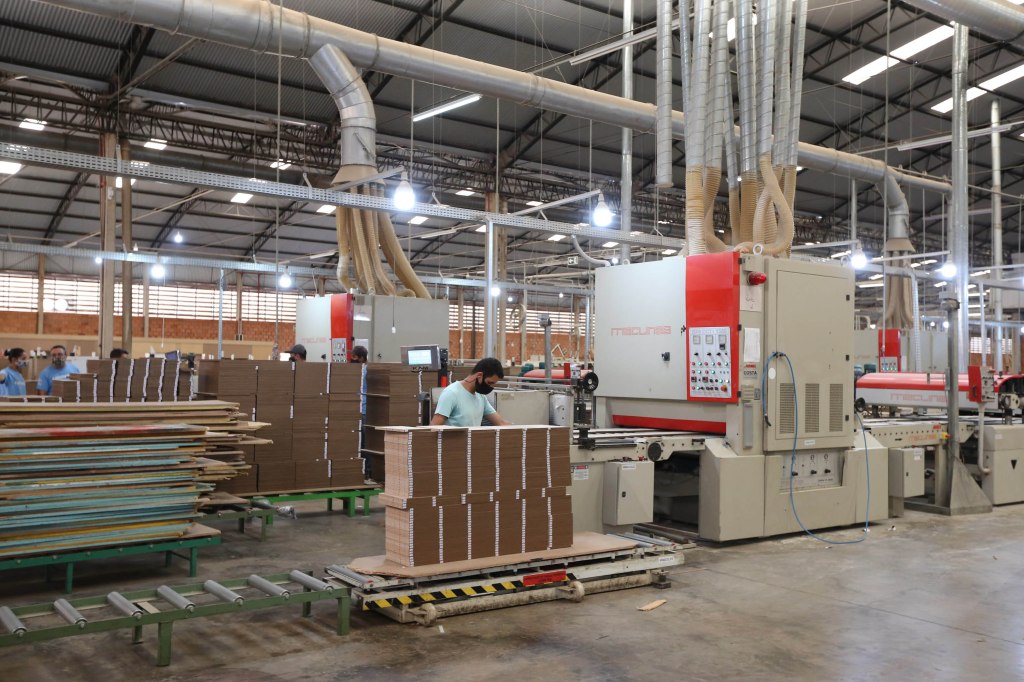
Look for structured production cells, modern equipment (CNCs, UV lines, automated presses), proper ventilation, and material flow that supports efficiency. Clean, safe, and ergonomic facilities are usually a proxy for well-run operations.
10. Contract Transparency
Trustworthy factories are comfortable signing NDAs, including IP clauses in contracts, and aligning deliverables in writing. They know that clear agreements protect both sides — and that confidentiality builds long-term trust.
How Vista Simplifies the Process
We act as your boots on the ground in Brazil, pre-vetting factories so you don’t waste time with the wrong partners. We’ve already helped brands and marketplaces launch collections across categories like seating, storage, bedroom and flat-pack — with total operational visibility.
Vista’s sourcing services include:
- Supplier scouting and factory visits
- Sample coordination and packaging validation (ISTA, Amazon, Target)
- Quality inspection and compliance audits
- Export readiness support (FSC, TSCA, CARB)
- Freight coordination from ports like Santos
Learn more at: https://www.vista-furniture.com/services
Conclusion
Vetting a supplier is not just about avoiding risk — it’s about building a supply chain that lasts. With the right factory, you reduce lead time, improve margins, and protect your customer experience.
That’s why Vista exists. We help global buyers connect with Brazil’s top export-ready manufacturers — with no operational headaches.
🔗 www.vista-furniture.com
📷 Instagram: @vista.furniture.co
💼 LinkedIn: Vista Furniture Co.
contact@vista-furniture.com
Let’s build better, together.

 Brazilian Furniture Sourcing Hub
Deixe um comentário